The bell needs hands and words
A call button assumes the person can reach it, press it and explain. Many residents can do none of these.
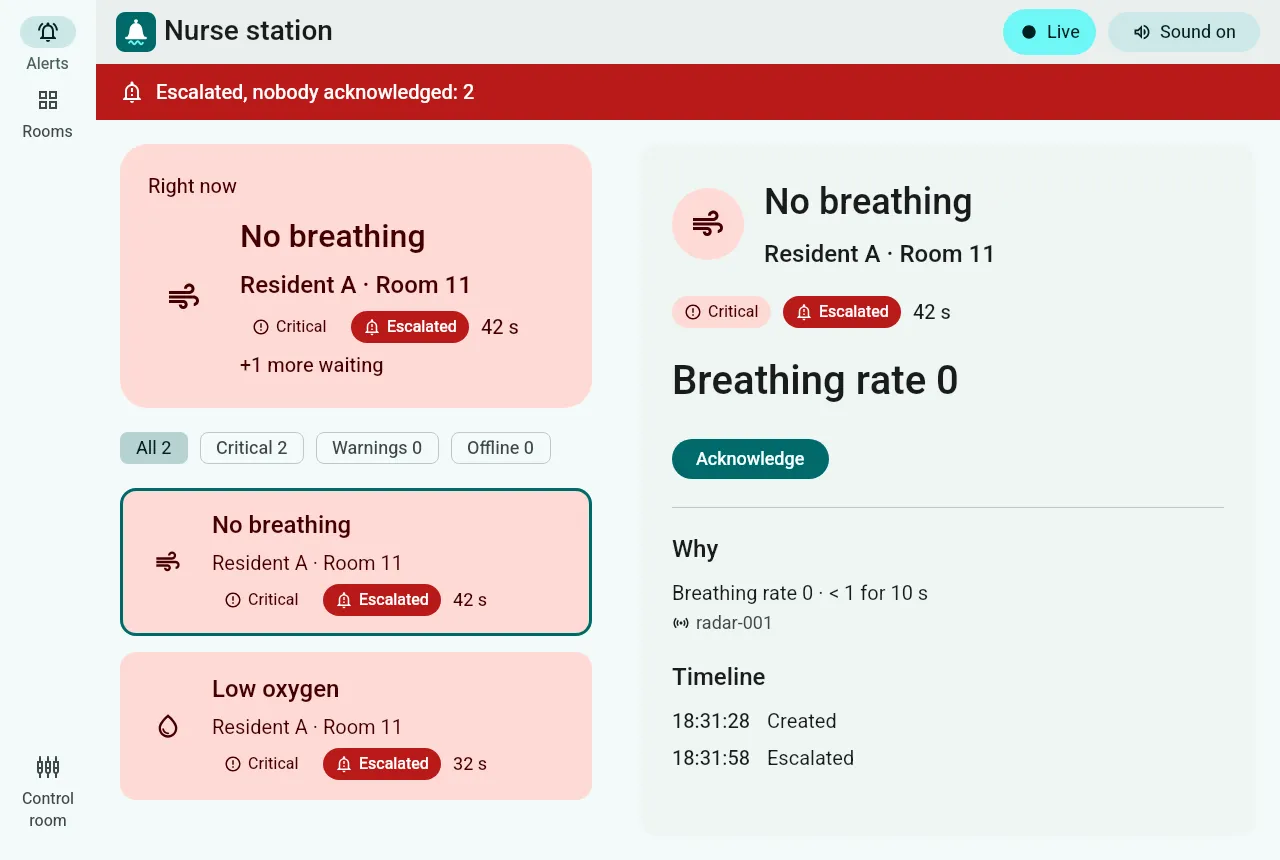
Adi Monitor turns a resident’s breathing, vital signs, movement and voice into their call bell. Simple sensors watch for danger, and the nurse’s phone rings with what happened, to whom, where and why, escalating until someone answers.
The problem
In rehabilitation villages and care homes, people with severe physical or cognitive disabilities depend on someone noticing. When they choke, stop breathing well, fall or are in distress, nobody is called unless staff happen to be in the room.
A call button assumes the person can reach it, press it and explain. Many residents can do none of these.
Rounds are spaced and staff are few. The minutes between rounds are exactly when breathing problems are missed.
Hospital monitors raise so many false alarms that staff learn to tune them out. A new alarm must earn trust.
See it work
Real backend, real nurse app, simulated sensors and the laptop’s real microphone: a new sensor plugged in with zero code, a resident who stops breathing, an escalation nobody answered, a sensor pulled out, and a rule changed live.
How it works
A breathing radar by the bed, an oximeter and thermometer on the resident, a bed-exit pad, a room microphone and the call bells already there.
One small computer per room collects the sensors and sends only events and scores, never recordings.
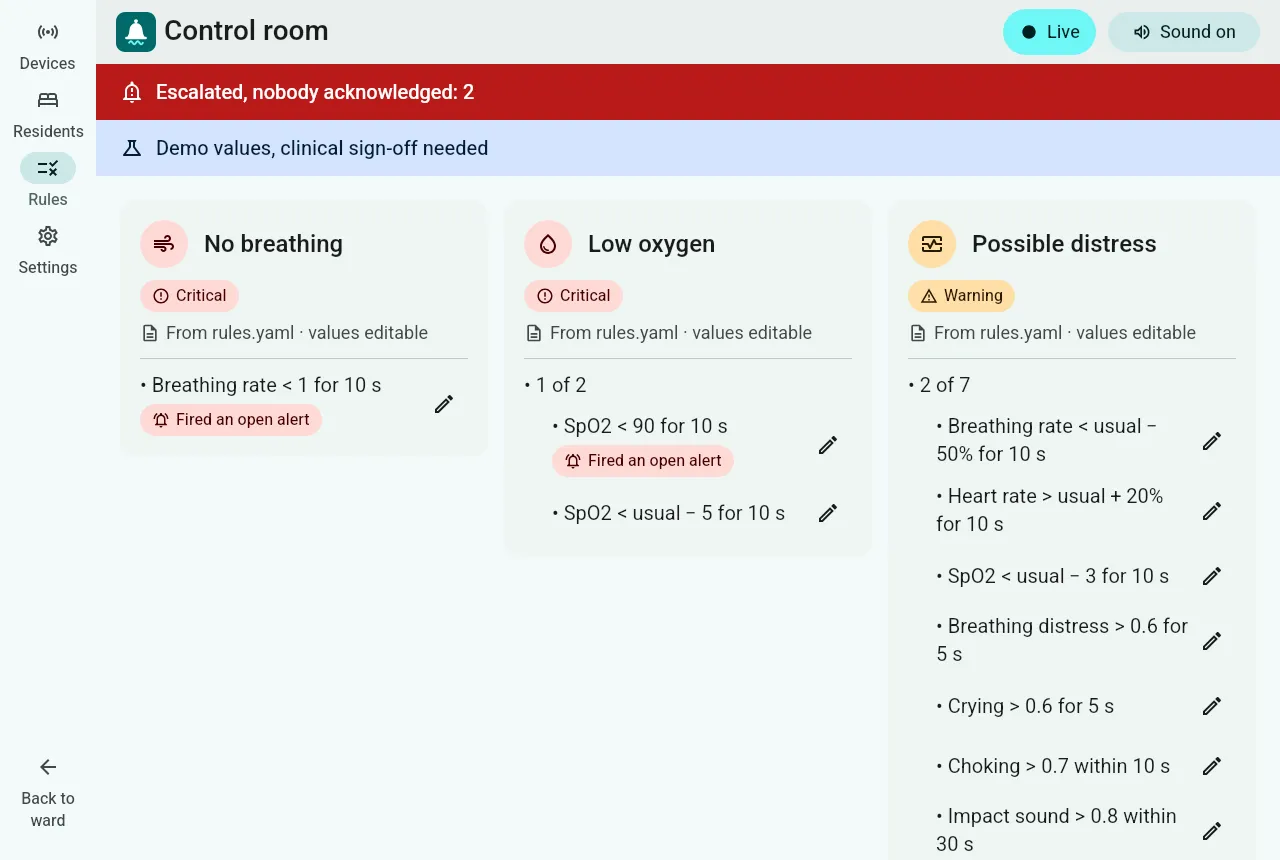
Decides: rules per measurement, each resident’s own normal values, two independent signals before some alerts, a record of everything.
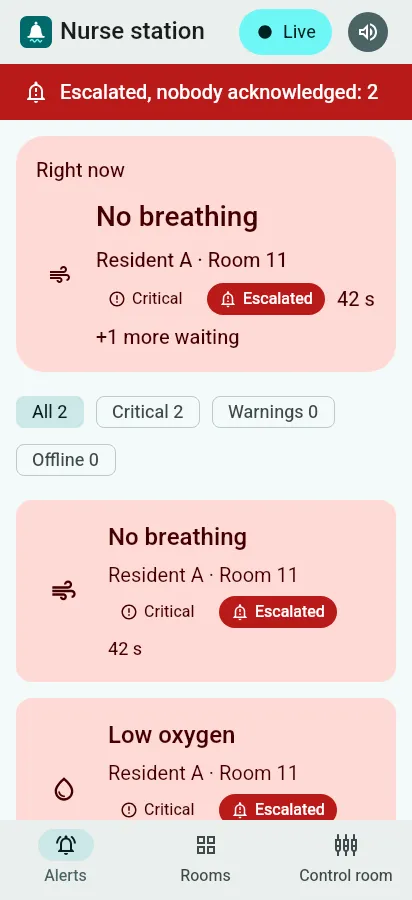
What happened, to whom, where and why. Phones ring; if nobody answers, it escalates.
Everything runs inside the building, on its own network. Nothing goes to the cloud.
Nobody answers? It escalates.
A critical alert rings the phones of the nurses on the ward.
Not acknowledged in time: the shift lead is paged as well.
Until someone acknowledges, both are reminded again.
Every page is logged with how many phones it reached, including zero.
Why it’s different
A silent sensor raises “sensor offline”, never a false “not breathing”.
Two independent signals must agree before some alerts, and each resident is compared with their own usual values.
Sensors check in every 5 seconds. A screen that lost its connection says “not live” instead of looking calm.
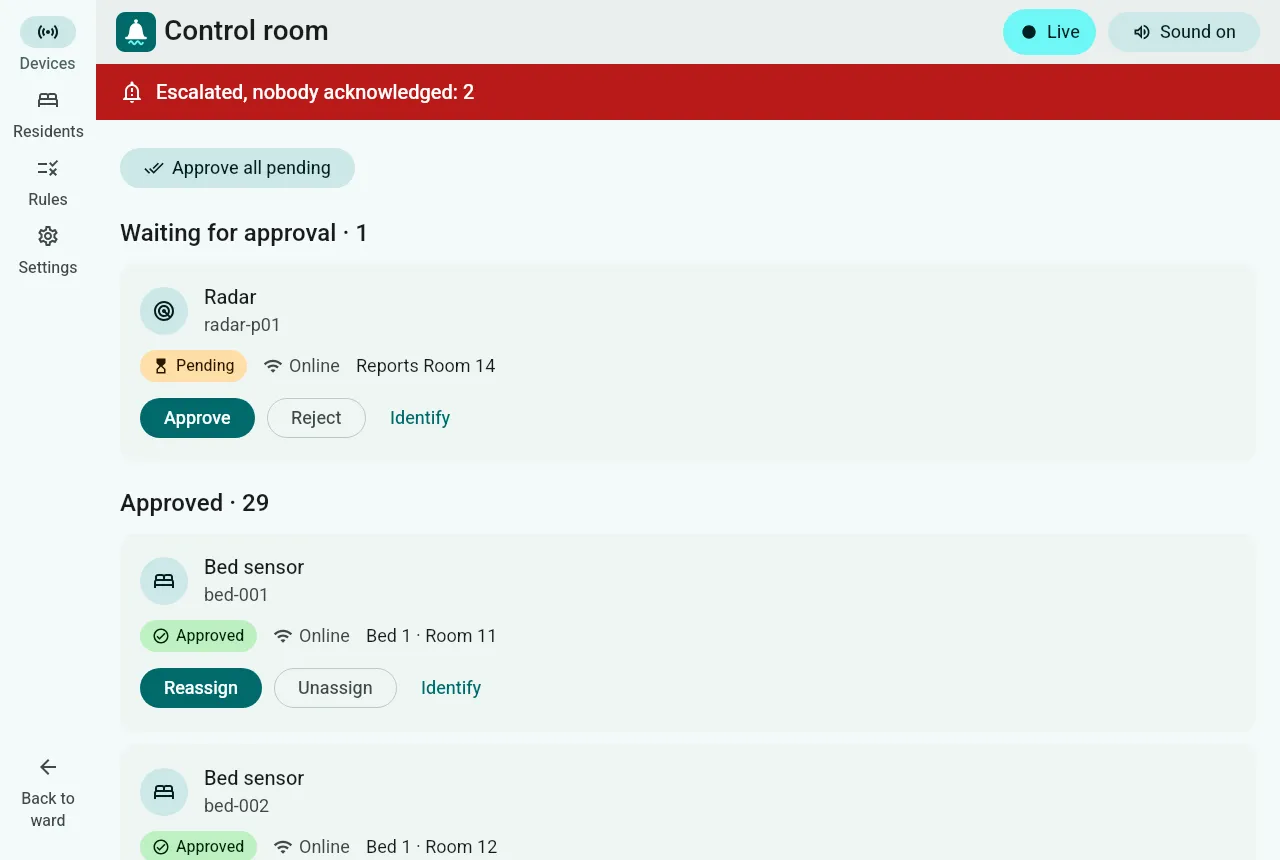
Plug it in, approve it to a room, a bed or a resident. That’s it.
Sound is analysed in the room; only a score leaves it. Nothing is recorded, nothing goes to the cloud.
Approvals, alerts, pages and rule changes are journaled: who knew what, and when.
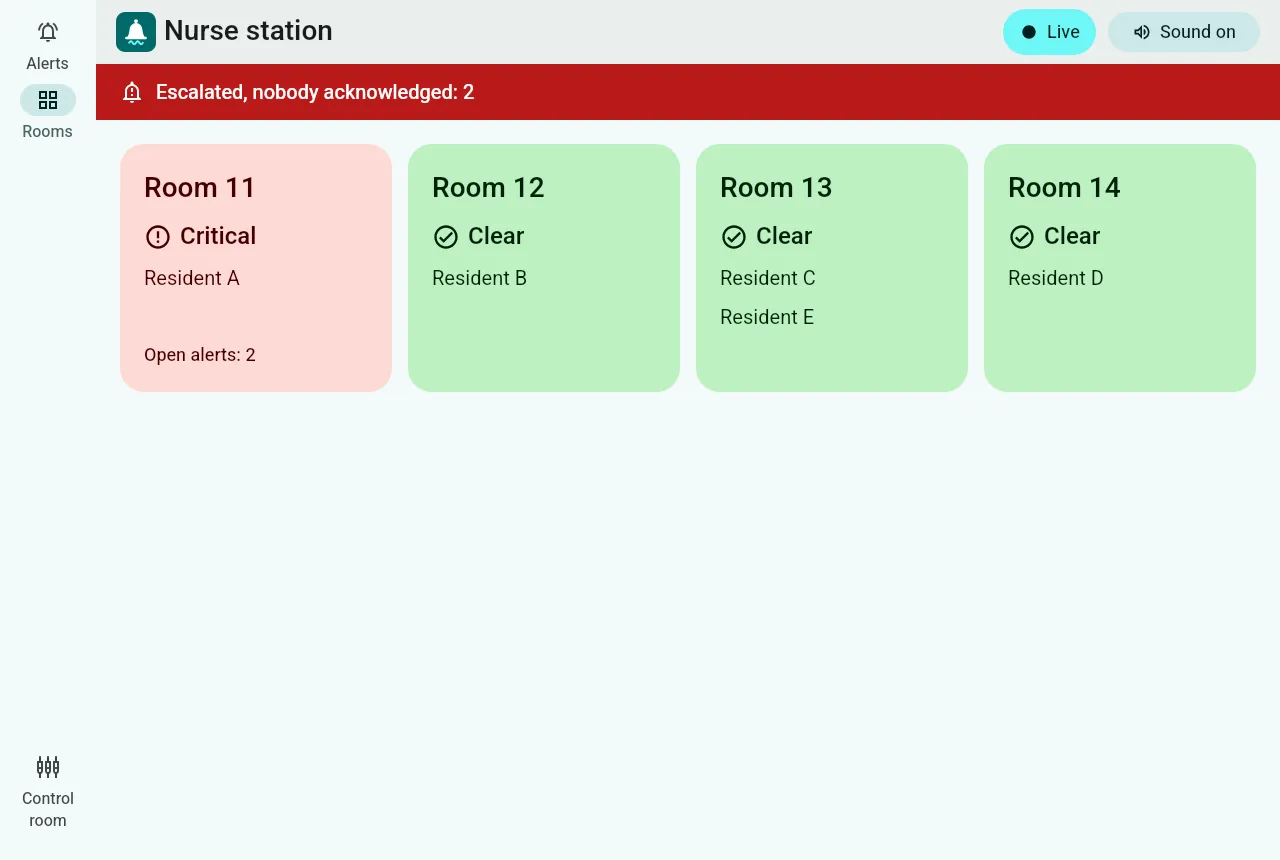
The screens
Where we are
Roadmap
We are looking for a pilot site, clinical partners and early supporters.